How can you avoid stupid critics from the people who will grade your work?
In short: Frame your project in a way where you define what is the zone of combat. Here four things you can do practically:
Use a project that creates a mental image
Say what type of project it is with an additional adjective (for example: an impact led association, a redesigned customer experience, a service startup, etc.)
Say what's in the scope and what isn't in the scope of your project
Say what is the role you take in this project (activist, in house service designer, social designer, etc.)
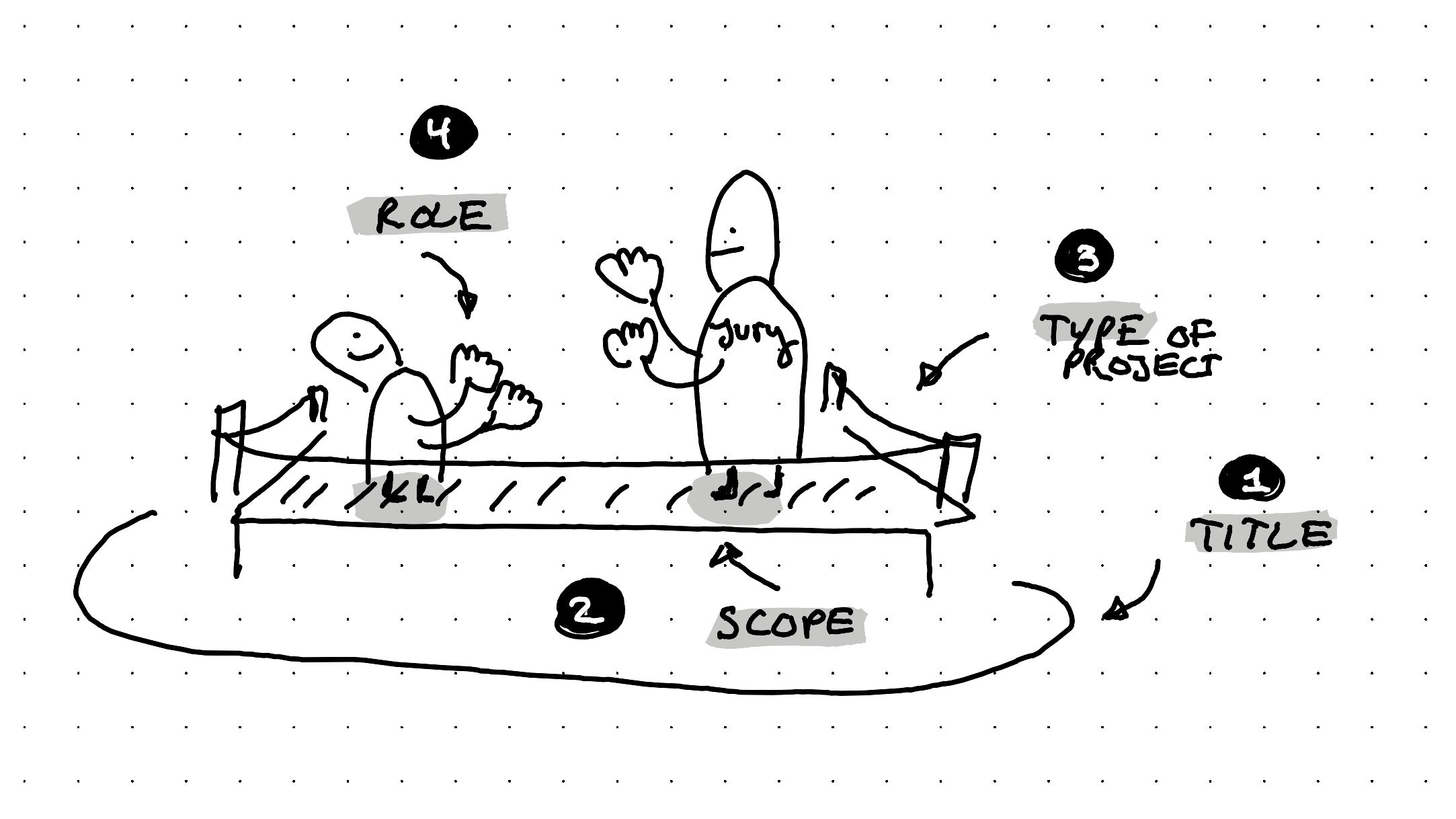
You set the combat zone.
The way you frame and introduce a project, can positively bias jury members and better help them understand what you are trying to achieve. There are a few things you can do to help frame your project.
A master project presentation can be seen like a fight, There is you and your opponent. But your opponent is one that 's super jacked and has a black belt in many martial arts, when you are just a yellow belt. What you can do is to choose the rules of combat and where the fight will happen so that it favors you.
A project name that creates a mental image
The title of your project is the first opportunity to frame your project. Choose a title that already teases what the project is about.
Kilian XXX for example gave to his Master Project in Digital Ideation the name "Flowmotion" this made clear that his project is about the notion of flow and that its about movement. Compare this to projects names like: Project Yellow or Dilloo. Both would be nice startup names but they don't help people know right away what your project is about,
Say what type of project it is and add an adjective
To me two of the worst ways to describe a Service Design are to say you created a platform or a service. These two words just are blackbox terms. Instead you could use terms like:
Impact led association
Serious game
Low Tech Methods library
Backstage restructuration
Two sided marketplace
Productivity SaaS
etc.
What you want here is that the combination of the title of your project and of the type of project already puts your project in a box.
For example, if you say that your project is an impact led association, then when you show people, it's clear without saying anything that these might be volunteers. Knowing it's an association then clarifies that here it's not a project that is made to make a shit ton of money.
A clarification of what's in and what's out of the scope
A master project can't do everything. And depending on the background of the jury members they might be very surprised by the things you didn't do.
That's why it can be really helpful to frame your project by showing you understand the many layers of the situation that you are working on, and then show on which level, which focus you are working and what are the parts that you decided to not address and why. With that jury members know that you didn't do their favorite thing, not because you are not aware it exists, but because you decided to use your time strategically.
A statement of your role in the project
By saying what type of role you gave yourself or you took in the project you share, you help jury members to give critical feedback based on that role. If you say you took the role of a design activist, the expectations are very different than if you say my role is to be a business designer.