Why the length of your message matters?
In short: when you ask someone for help it shouldn't feel like a lot of work to give a first: yes tell me more or no thanks answer.
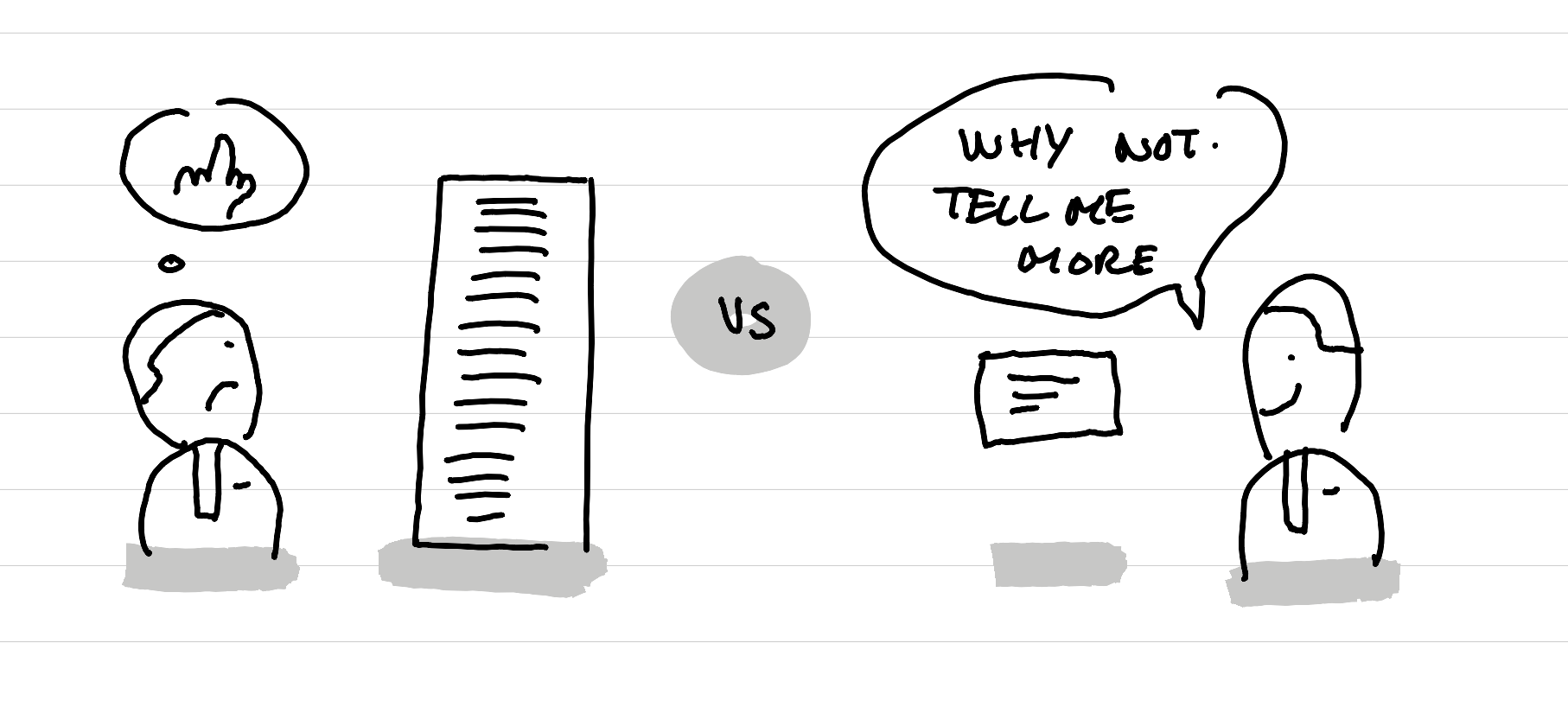
I'm both on the side of the person that makes a lot of requests (to invite guests to courses, webinars, conferences) and gets a lot of requests.
As much as time is a currency of respect in Swiss work culture, writing short request messages feels to me to be a currency of respect for many busy professionals.
My goal when I send a request is that the person can quickly tell me:
Sounds interesting tell me more about...
No thanks
All good send me the calendar invite with the details
My mate Romain Pittet often followed the 4-sentences email rule. I feel such a rule can be a great help when crafting a request message.
A short request message shows that you put the work and effort to choose every word. This obviously reminds me of the writer (it seems to have been Blaise Pascal) who wrote a letter to a friend saying:
“I have made this longer than usual because I have not had time to make it shorter.”
Or in French:
« Je n’ai fait celle-ci plus longue que parce que je n’ai pas eu le loisir de la faire plus courte. »
Backstage of this article
This article was written and illustrated on a refurbished Remarkable II tablet. The handwriting was converted to typed text using the Connect service by Remarkable. You can download the original note below if you are curious.