What's are common problems with stakeholder mapping?
In short:
False accomplishment: Feeling the work is done because the mapping is done. When you buy a map it's to go for a hike. Not to just look at it.
Helplessness: Feeling that there's just too many people in the systems to work with, so feeling demotivated and not bothering to contact people, because: it's just too much.
Built on assumption: Mapping what you have in your head, instead of researching and asking what it's in your blind spot.
But how do you avoid that?
Map on evidence: find what's in your blind spot
Prioritize what it means: what are the top 3 things you need to do
Get out: do the hike, reach the people.
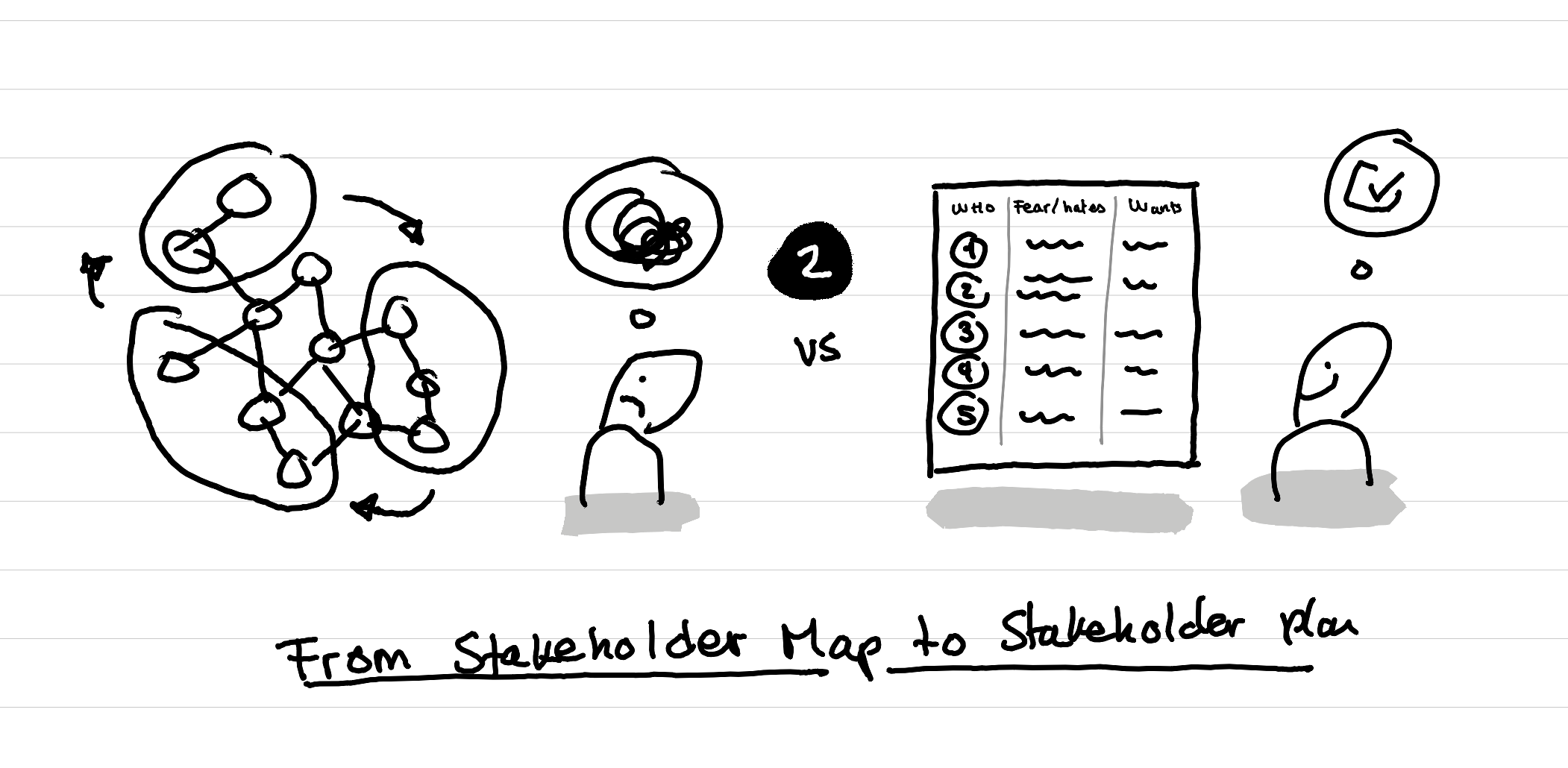
Stakeholder maps can give a fake sense of accomplishment
Some stakeholder maps are so complex, so detailed that they lead to a sort of mapping procrastination or analysis paralysis. People spend more time doing the map than using the map to walk. It's as if you had bought a great map for hiking that gives you many trails, but you just look it at home without actually go out for a hike.
The same happens with many other synthesis tools: persona, blueprints, etc. They give a sense of "I have done something" when in fact you just "prepared the tool that will help you do the right thing".
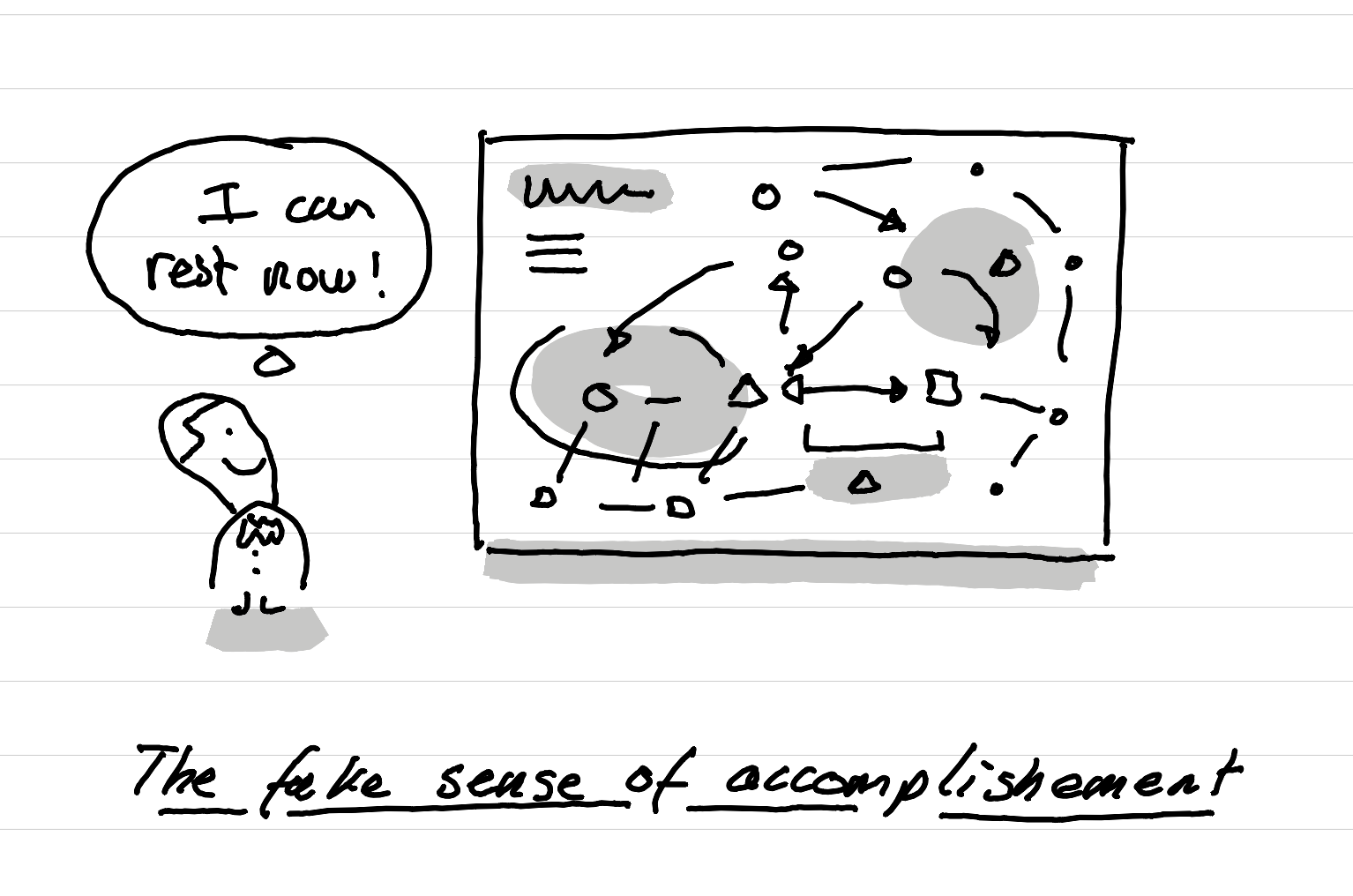
This fake sense of accomplishment leads often to people:
not prioritizing with who to engage and how
not actually doing the uncomfortable work of calling, having a coffee with the people who were previously in a blind spot that the map revealed
not answering the question: okay but what does this help me to do or not do?
Stakeholder maps that aren't prioritized can lead to helplessness
The other side of the analysis paralysis is that it can push people in a sense of helplessness.
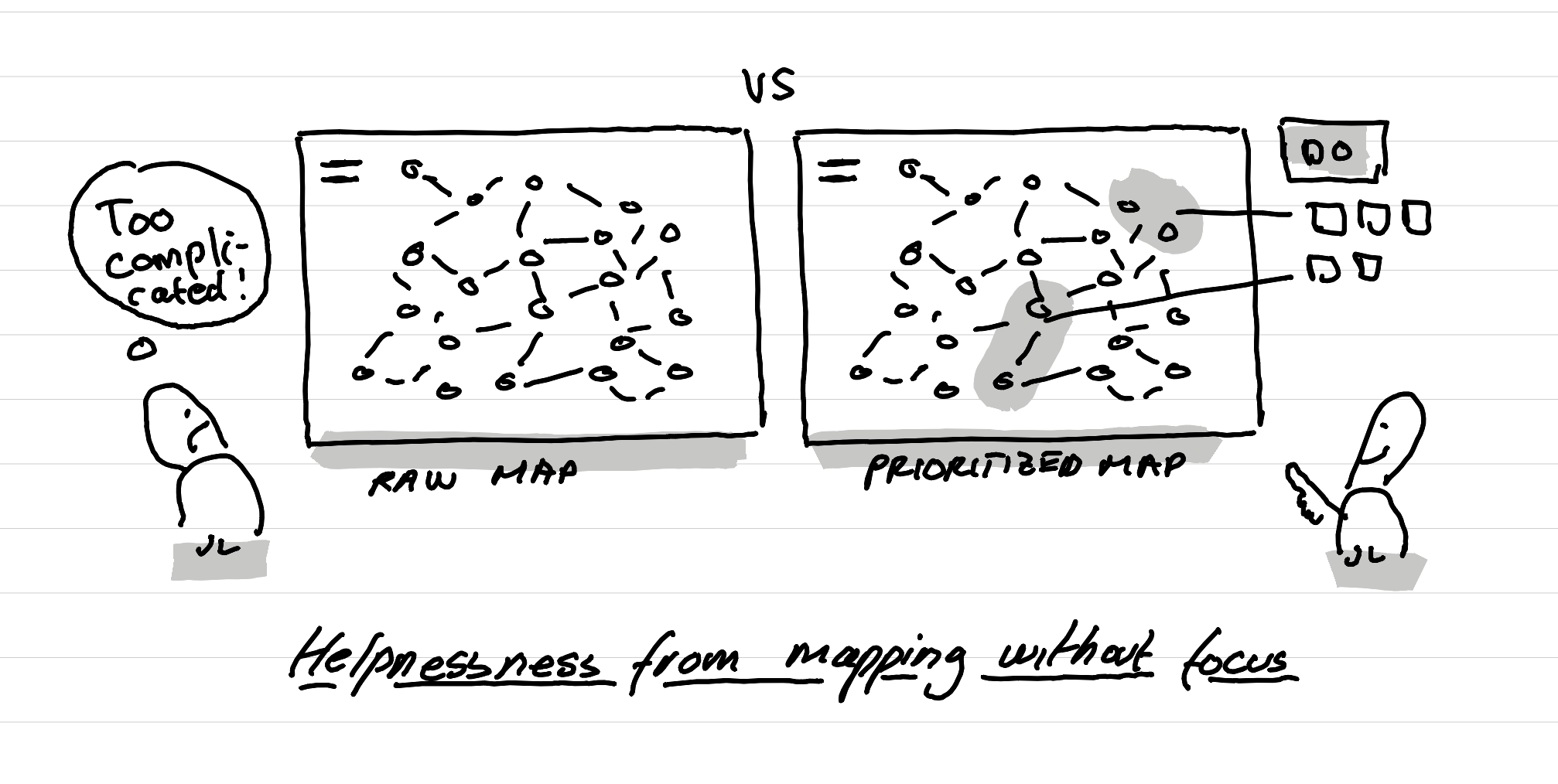
When all parts of a mapping feel at the same level it can feel that it's all too big. There are too many people to engage. So why even start? Instead when you prioritize (including the parts that are uncomfortable but important) you gain a sense of : "This is where I'll make a dent in this big universe".
Stakeholder maps that are based on assumptions miss the point
Personas are great tools when they are based on actual research. They are even useful when not done with research to speak with experts who will then reveal your blind spots.
The same is true with a stakeholder Map or any other synthesis tool: a journey map, a Service blue print, a Business Model Canvas, etc.
When just based on assumptions, the whole mapping exercice misses a key point: revealing what is in your blind spot. Revealing who you need to talk too that you didn't have on your radar. Revealing who you need to protect of the potential side effects of your work.
Backstage: written and illustrated by hand
This article was first written and illustrated by hand on a refurbished Remarkable II tablet. The text was then automatically transformed into typed text with Remarkable's Connect service. I've slightly restructured the article and added an updated summary. If you are curious you can read the original hand written article in the PDF below.