How do you know if you're testing the right assumptions in prototyping?

In short: A true risky assumption to test is one that makes you feel stressed when you think of testing them. If you feel stressed it means that there is real danger that if this is wrong your project fails. And that’s something you want to test first.
Often before you go into a Service Design project or prototyping project Service Design professionals do an assumption mapping. Basically they create a list of assumptions that support their service idea. They then sort them out to find which are the most important assumptions for which they have no evidence yet.
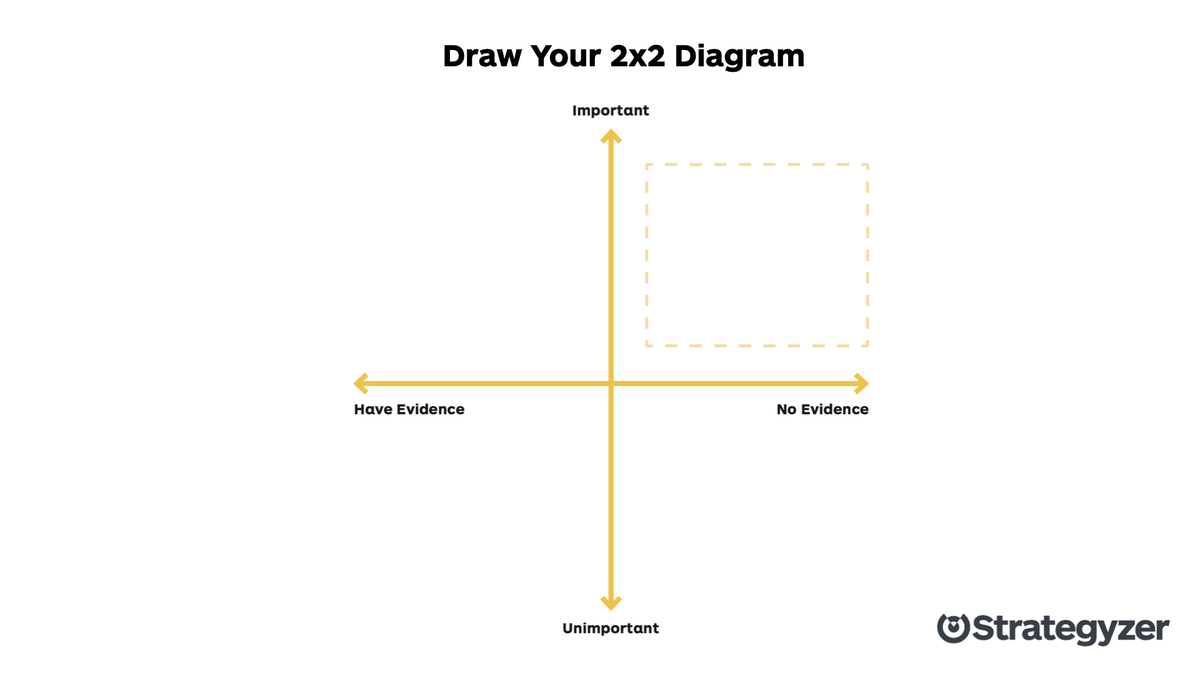
You want to work on these riskiest assumptions - the things you're absolutely unsure of that might break or delete the service if they're not true.
But here's the thing: how do you really know if an assumption is really critical?
In a mentoring session with one of my students at the Master Service Design of the HSLU, Lucerne University of Applied Sciences and Arts we came up with this litmus test:
If when you’re thinking of doing a prototype to test an assumption you feel stressed that things could go to shit and you might have to change your idea after the test, then you've really found a critical assumption.
If you feel very relaxed about what will come out of the results, then maybe you haven't found the most critical thing yet.
So if you have a hard time deciding if an assumption is really that important or not, make a gut check: does it stress me to these this element of my service idea?
Go further
The book "Testing Business Ideas: How to Get Fast Customer Feedback, Iterate Faster and Scale Sooner" by David Bland and Alexander Osterwalder has a great step by step process about this approach.
Written with AI help: This article is based on an audio note I took that was transcribed and cleaned using Notion AI. I then reviewed and improved the text by hand.