What are the different types of prototypes?
In short:
Prototype for synthesis: something you build to understand a service, or an idea.
Prototype for strategic testing: a prototype to test the direction or value of a big idea.
Prototype for touchpoint improvement: a prototype to test what is the best way to create or improve a specific interaction.
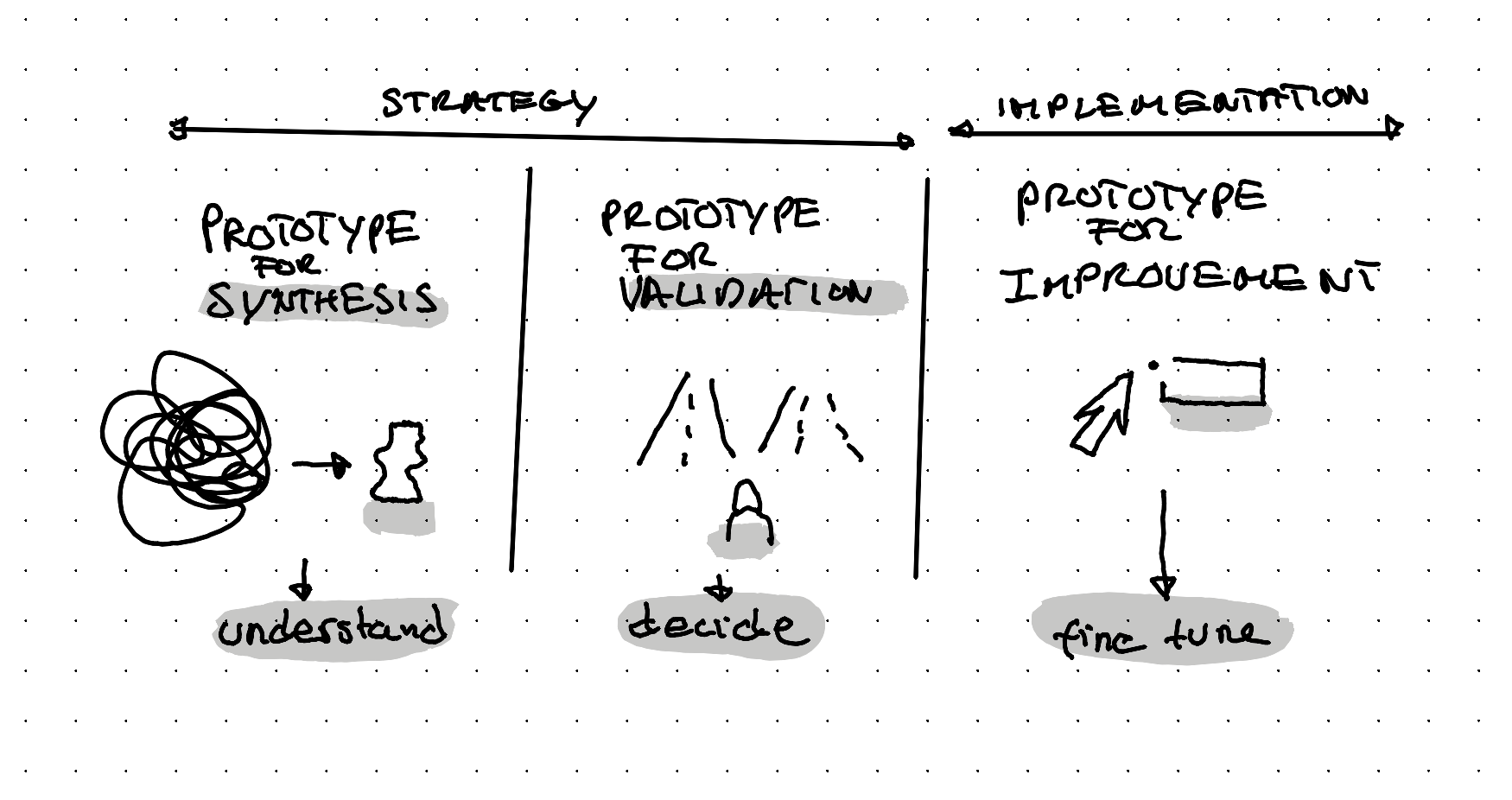
Prototypes for synthesis
Sometimes you need to get things out of your head to better understand them. You build something tangible to describe your idea. It can be even very artistic, like building out with clay a sculpture that describes how people usually feel when using your service.
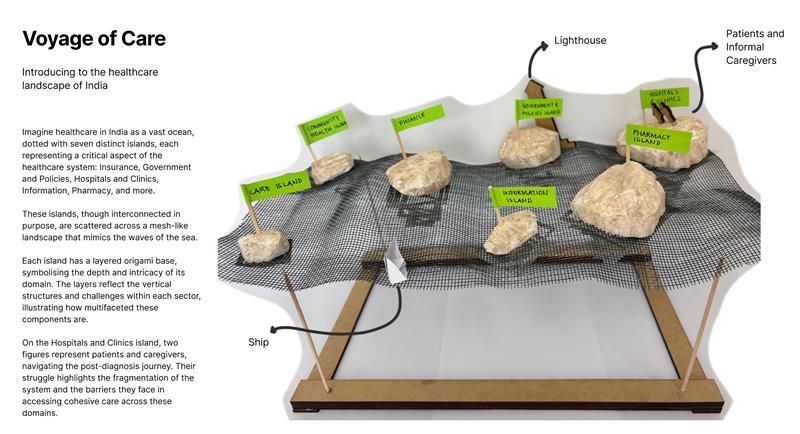
A good example of this approach, is a prototype called Voyage of Care, created by Sharaya Naik. Here Sharaya shows that a healthcare journey is like going from island to island but not having bridges, boats, etc. She then explored what could be a "bridge" service versus a "boat" service in healthcare.
Prototypes like these, are made to refine your thinking. And it's kind of okay if you don't test them with the final users. Because they are there for you.
Just like a back of the napkin sketch that is a note that will help you kickoff a project.
Prototypes for strategic testing
There are prototypes that are made to test out if the direction you are about to take really is worth it. Here, before you even start building the prototype a lot of strategic work goes into in: you synthesize all what you learned (for example in a tool like a Service Blueprint, a Value Proposition Canvas, a Business Model Canvas, etc.). And then you pick the most risky assumption your whole strategy is built on. And you test that thing. That's approach is pretty well described in the book "Testing Business Ideas".
Prototypes for improving implementation
These prototypes are made to refine the details of the touchpoints that will make your service. Here you test out the wording of a form, or the navigation of a website, or the best way to greet someone in a hotline call. The big strategic direction is already validated. Now you test out the details.
N.B.
These are just three types of prototypes. With any of these listings, you could have more categories, or different ones. These are three categories that I find particularly useful when teaching prototyping.
Backstage of this article
This article was illustrated on a refurbished Remarkable II tablet and written on it using a type folio keyboard. You can download the original note below.